Key Takeaways
- Auto pens simplify patient training with one-press injection; manual pens keep dose control fully in the user’s hands at a lower per-unit cost.
- Device cost, training burden, and dose-setting behavior — not injection pain alone — drive the choice between auto and manual injection pens.
- Request actuation-force data, dose-accuracy evidence, and regulatory documentation from suppliers before comparing unit prices.
Procurement teams comparing an auto injection pen against a manual injection pen are usually not choosing between two identical products. They are choosing between two delivery concepts that change dose training, unit cost, and patient confidence differently. This guide covers the differences that matter for B2B programs, and how to evaluate suppliers for either path.
webosan manufactures injection pen platforms for B2B partners — reusable and disposable. We do not retail finished medicines. Device references below describe compatible delivery devices only.
Auto injection pen vs injection pen: the practical differences
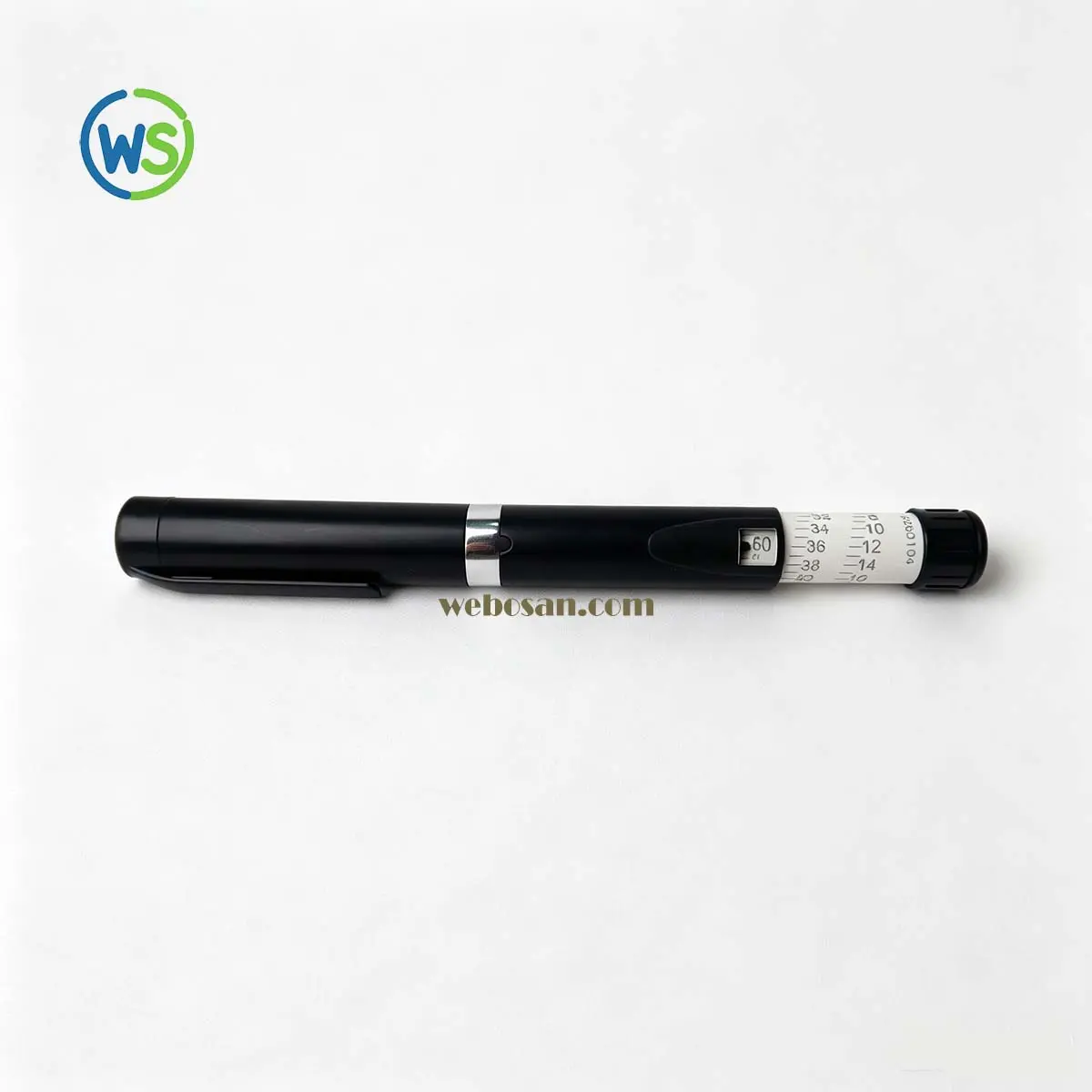
An auto injection pen (auto injector) triggers needle insertion and dose delivery automatically — the user presses a button and the device completes the injection. A manual injection pen requires the user to insert the needle and press a plunger with controlled force.
| Factor | Auto injection pen | Manual injection pen |
|---|---|---|
| Dose delivery | Automatic spring-driven | Manual push |
| User training | Shorter, lower-skills | Moderate |
| Unit cost | Higher (mechanism complexity) | Lower |
| Form factor | Usually larger | Compact, pen-like |
| Dose feedback | Often audible/tactile | Scale + tactile count |
| Failure modes | Mechanism reliability | User technique |
For insulin, GLP-1, and peptide programs, the decision usually comes down to who administers: patients self-injecting at home (manual pens are often preferred for cost and familiarity) versus clinics or caregivers wanting consistent delivery (auto injectors reduce technique variance).
When a manual injection pen is the better choice
Manual pens win on unit economics and user familiarity. Most insulin therapy programs worldwide still use manual pens, and the same logic applies to GLP-1 weight-management devices: the dose is set by dial, delivery is controlled, and patients learn the motion quickly.
B2B considerations for a manual pen:
- Lower per-device cost at scale
- Well-understood ISO 11608 cartridge interfaces
- Easier to customize dose scales, colors, and branding
- Existing patient education materials transfer across programs
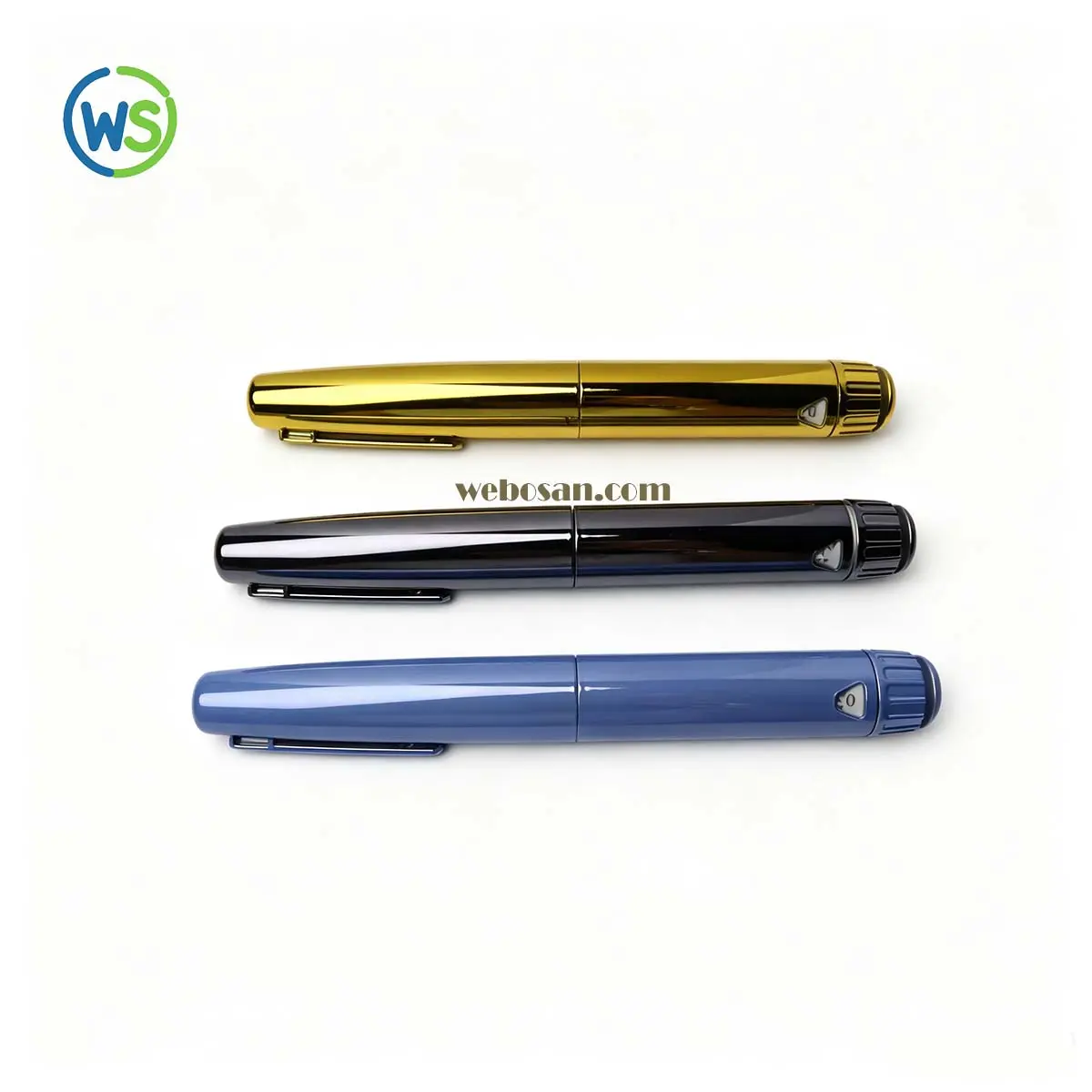
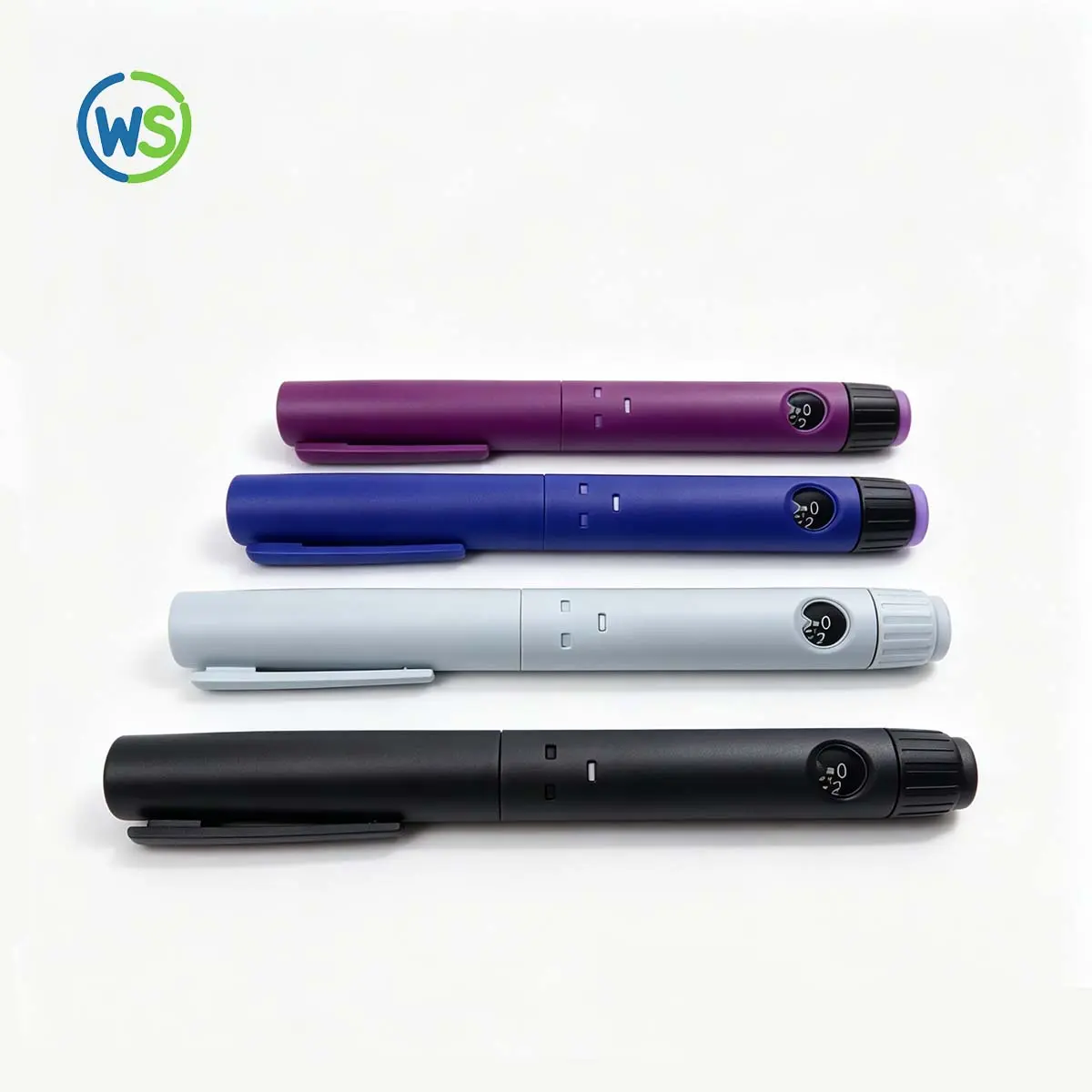
webosan's reusable platforms (WS-RF series) and disposable platforms (WS-DS series) are manual injection pen systems designed for this path, supporting 3 mL cartridges among other capacities.
When an auto injection pen fits better
Auto injectors suit programs where delivery consistency matters more than unit cost — clinical settings, caregiver-administered therapy, and patients with dexterity concerns. They also simplify adherence messaging: "press and hold" is easier to teach than "dial, insert, push, hold."
If your program needs auto-injector-style delivery, evaluate the mechanism reliability data, drop-test performance, and cold-chain behavior of candidate platforms before sampling.
How to evaluate an auto injection pen or injection pen manufacturer
Whether you choose an auto injection pen or a manual injection pen, supplier evaluation follows the same checklist:
- Dose accuracy evidence — ask for force-curve and dose-accuracy test data, not just spec sheets
- Cartridge compatibility — ISO 11608-3 cartridges; confirm fill volume and stopper interface
- Sample protocol — samples before artwork lock, with documented review
- Customization scope — colors, scales, logos, IFU languages, packaging
- Market documentation — device classification, labeling, and export paperwork for your destination markets
- Volume roadmap — unit pricing and lead time at your planned ramp
A factory-direct manufacturer (rather than a trading company) can show you mold development, molding, assembly, and inspection in one place. That visibility is worth more than any brochure when you are committing to a program.
Next steps
Start with the device path that matches your therapy workflow: manual injection pens for cost-sensitive, patient-self-injected programs; auto injection pens for consistency-first or clinic-led programs. Then compare suppliers using the checklist above, request samples, and validate dose accuracy against your formulation before locking branding or packaging.