Key Takeaways
- UK buyers often arrive with a sourcing list, not a product request — platforms, dose ranges, samples, and packaging come before price.
- The reusable-versus-disposable decision drives tooling, cost, and labeling, so it belongs early in the conversation.
- A serious sourcing visit ends with concrete next steps: sample protocols, documentation review, and a named contact on the factory side.
The message came in on a Tuesday morning. A British buyer was in Shenzhen for a supply-chain review and wanted to visit the webosan office the same week.
Engineer Zhang checked the meeting schedule, picked up her phone, and walked out of the office to meet the visitor at the entrance. It was a short walk through the corridor, but it set the tone for the day: no waiting room, no front-desk formality, just a factory team member ready to talk about the actual program.
The buyer was sourcing injection pens for a distribution project in the UK market. He was not looking for a single product photo. He carried a list of questions about platforms, dose ranges, cartridge formats, samples, and lead times — the kind of list that only appears when a buyer is close to a decision.

1. The Buyer Came With a Sourcing List, Not a Brochure Request
Many first visits start with "show me your products." This one started differently.
The buyer's list was organized around decisions, not models:
- Which platforms are available for a reusable program, and which for a disposable one?
- What dose ranges can each platform support without custom tooling?
- How do samples work — what does the buyer receive, and what evidence comes with them?
- What packaging and branding options exist for the UK market?
Zhang answered by mapping the list onto the factory's actual platforms. Instead of describing features, she explained what each choice locks in: a reusable platform means a cartridge-loading routine and a device that stays in the patient's hands; a disposable platform means simpler instructions and a sealed, ready-to-inject format. Both are valid — but they lead to different tooling, different labeling, and different cost structures.
That framing is exactly what B2B sourcing conversations need. When a buyer understands what a choice locks in, the next questions become sharper.
2. Reusable or Disposable? The Conversation Started With Architecture
The coffee room discussion quickly moved to the question that shapes every injection pen program: reusable or disposable?
The buyer explained that the UK project would serve two user groups. One group needed a device that supports frequent dose adjustments and long-term use. The other group needed something simple, with minimal instruction burden and clear one-shot logic.
Zhang walked through how webosan approaches both sides of that decision:
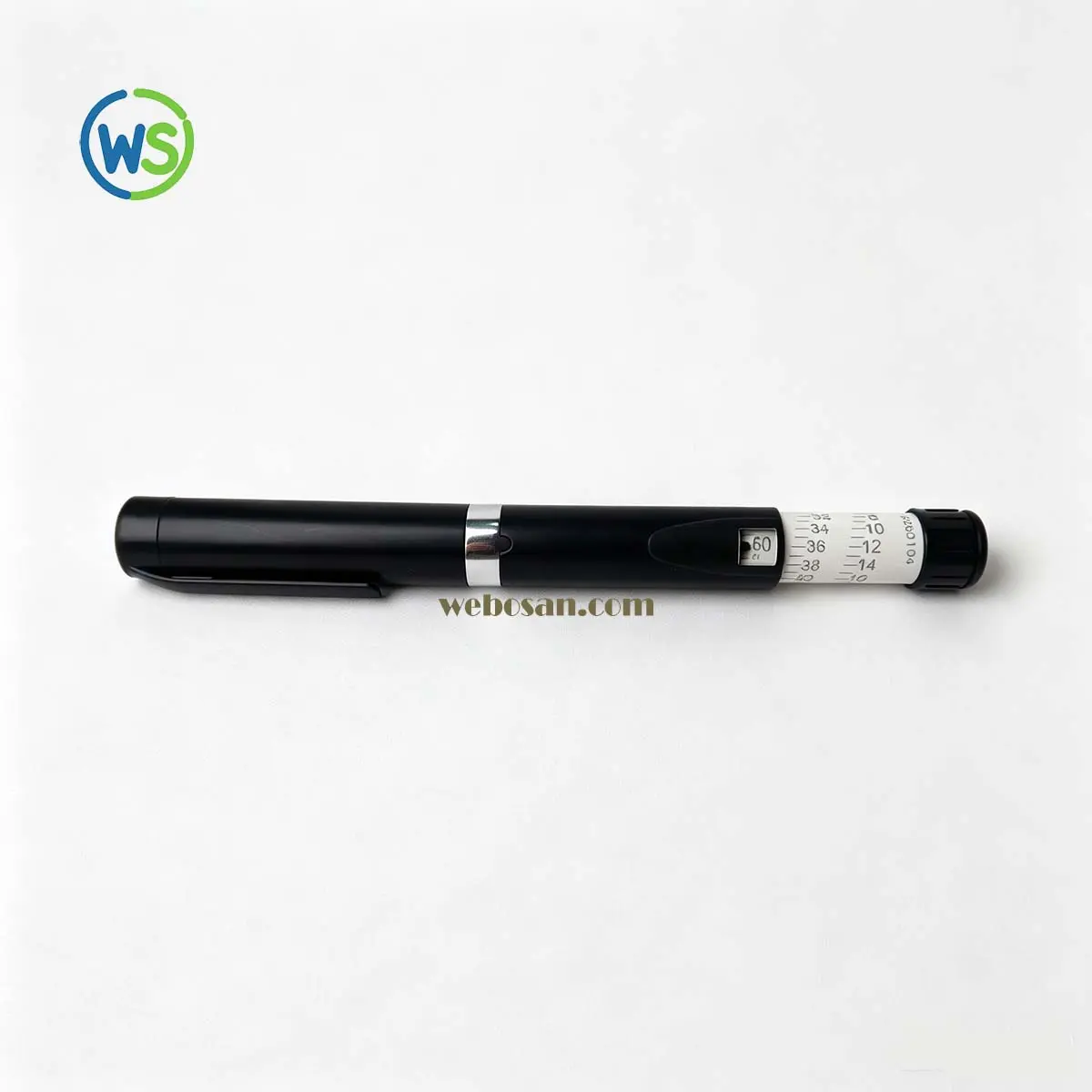
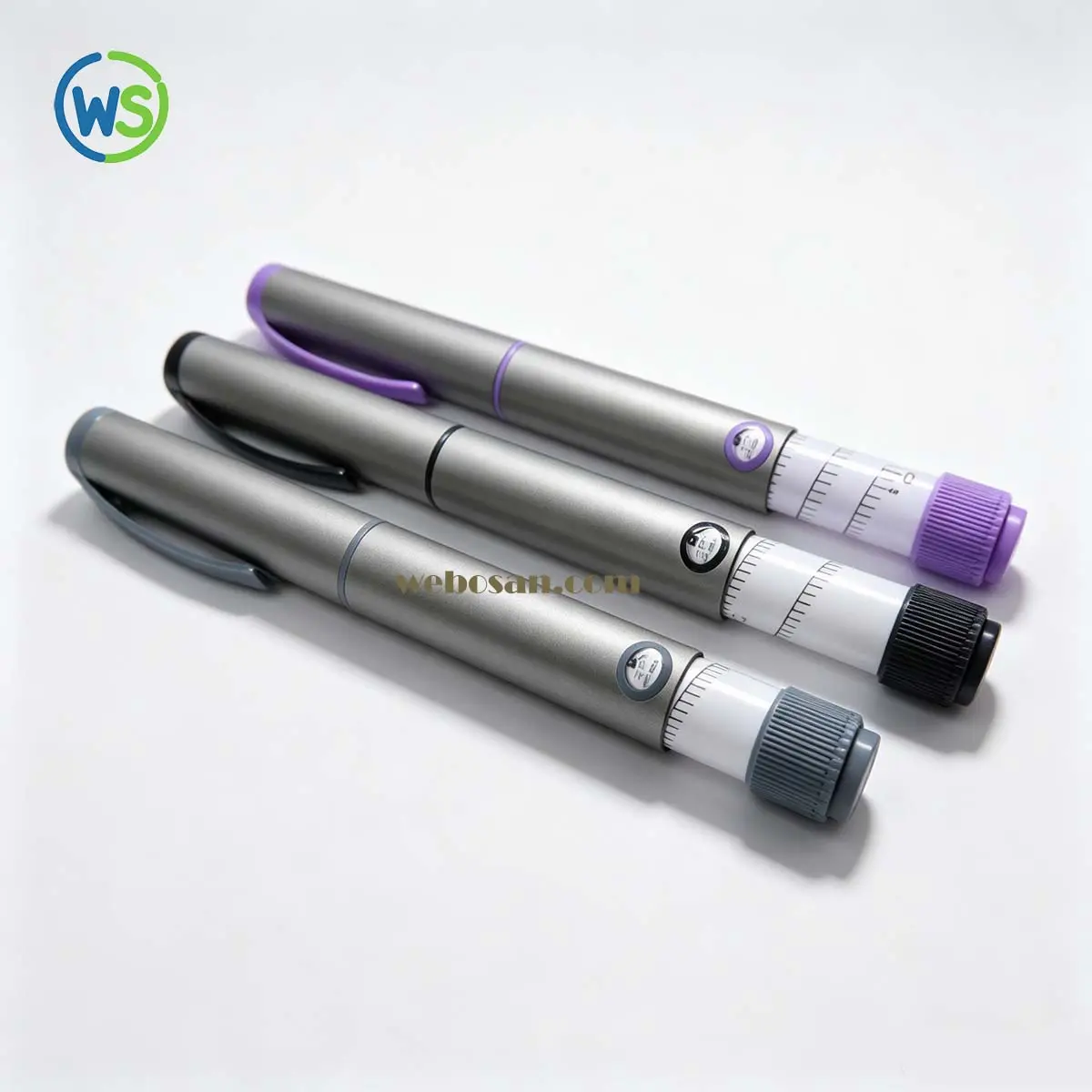
- Reusable platforms keep the drive mechanism and dose dial across cartridge changes. They suit broad dose ranges, frequent titration, and programs where the device itself carries brand value. Examples include the solid-metal WS-RF11 and the electroplated WS-RF10.
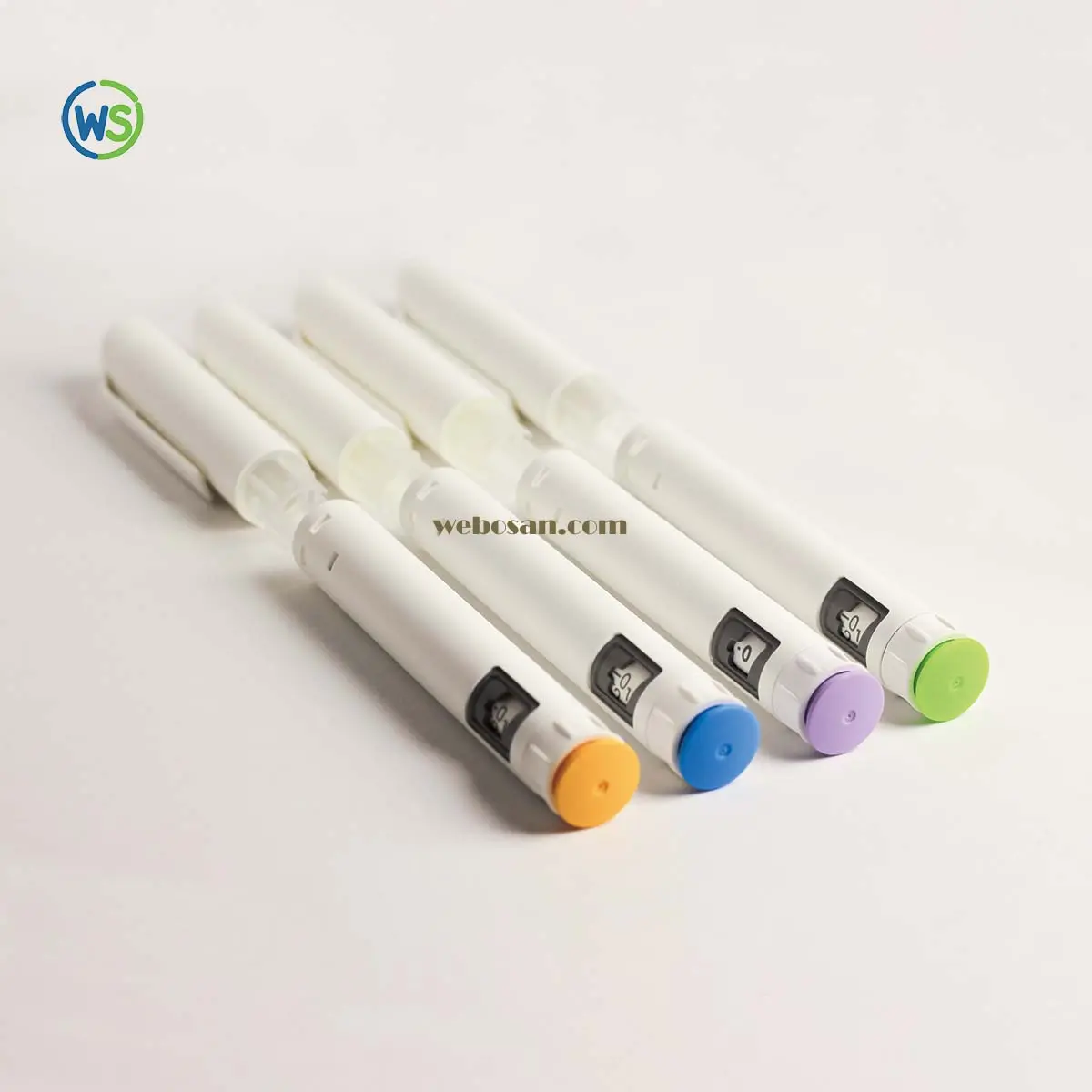
- Disposable platforms are built around one cartridge and discarded when the drug product is exhausted. They suit fixed or narrow dose ranges, high-volume programs, and markets where simplicity matters most, such as WS-DS01.
The buyer asked the practical follow-up: can the same program run both? Zhang confirmed that many programs do exactly that — a reusable platform for long-term patients and a disposable line for fast-market or lower-training segments. What matters is that the architecture decision comes first, because it drives everything downstream: tooling investment, per-unit cost, packaging, and patient instructions.
3. Samples, MOQ, and Lead Time — Turning a Conversation Into a Plan
With the architecture direction on the table, the buyer moved to the operational questions.
Samples. Zhang explained how sample requests work at webosan: which platform to start from, what the sample package includes, and what evidence accompanies it — dimensions, dose feel, and functional check notes. She recommended that the buyer evaluate samples from the perspective of the production platform, not as a one-off demonstration unit.
MOQ. The honest answer, Zhang said, is that MOQ depends on customization depth. Branding-only changes on an existing platform carry a different MOQ than new dial tooling or a new housing mold. Instead of a single flat number, she suggested the buyer request MOQ tiers per level of customization — a more useful answer for program planning.
Lead time. Zhang explained lead time in production terms: which steps depend on tooling readiness, which depend on material coordination, and which depend on assembly scheduling and inspection release. A delivery date, she noted, is only as real as the production plan behind it.
This part of the conversation is where many sourcing visits either gain or lose momentum. The buyer had clearly experienced suppliers who answered operational questions with vague language. Hearing the factory-side logic directly — with the actual steps named — made the conversation feel concrete.
4. What the Buyer Took Home
By the end of the visit, the buyer had not signed anything. He had something more useful: a clear picture of the options and a set of next steps.
- A recommended starting platform for the reusable segment.
- A disposable alternative for the second user group.
- A sample protocol covering what to request and what evidence to review.
- A documentation checklist: specifications, test data, and packaging references for the UK market.
- A named contact on the factory side for follow-up.
That last point matters more than it sounds. In B2B sourcing, a named contact who answers technical questions in writing is often the difference between a shortlist and a program.
5. If You Are Sourcing Injection Pens
The conversation with the British buyer followed a pattern that works for most sourcing projects:
- Decide the architecture question first — reusable, disposable, or both.
- Map dose range and cartridge format to the platform, not the other way around.
- Request samples with a review protocol, not as a formality.
- Ask for MOQ tiers and lead time broken into production steps.
- Keep one named contact who can answer technical questions in writing.
If you are evaluating injection pen platforms for a distribution or therapy program, you are welcome to bring your own sourcing list to webosan. We can walk through reusable platforms, disposable platforms, samples, MOQ, packaging, and documentation — the same way we did for this buyer.
You can also review our manufacturer guide for the full sourcing framework, or reach out through Contact webosan to arrange a visit or a remote discussion.