Key Takeaways
- Peptide programs need dose accuracy at small volumes, damping tuned to formulation viscosity, and cartridge/needle interface fit.
- Engineering fit is proven with data — dose accuracy reports, damping curves, and insertion-force measurements — not by samples alone.
- Confirm platform compatibility with the specific peptide formulation and cartridge type before tooling or branding work.
Peptide therapies — GLP-1 analogues, growth hormone, and other peptide-based programs — share a delivery profile that is surprisingly demanding for a manual injection pen: very small doses, precise volume steps, thin needles, and patients who self-inject for months or years. This article explains, from an engineering perspective, why a manual pen designed around those constraints fits peptide programs well, and what to verify when you evaluate one.
webosan manufactures injection pen platforms for B2B partners. We do not retail peptide medicines. Device references describe compatible delivery devices only.
The delivery profile of peptide therapy
Most peptide medications are administered subcutaneously with small volumes and small dose steps. Typical program requirements include:
- Small dose increments — units down to 0.01 mL or fractions of a milligram, because peptide doses are small
- Repeatable accuracy — the same dose every injection, week after week
- Thin-needle comfort — frequent injections make needle gauge and bevel design part of adherence
- Self-injection usability — patients dose at home, sometimes in low light, sometimes with limited dexterity
- Long-term logistics — cartridge or pre-filled formats that fit the therapy's cold-chain and distribution model
These requirements map directly onto the design parameters of a manual injection pen.
Design parameters that matter for peptides
1. Small, precise dose steps
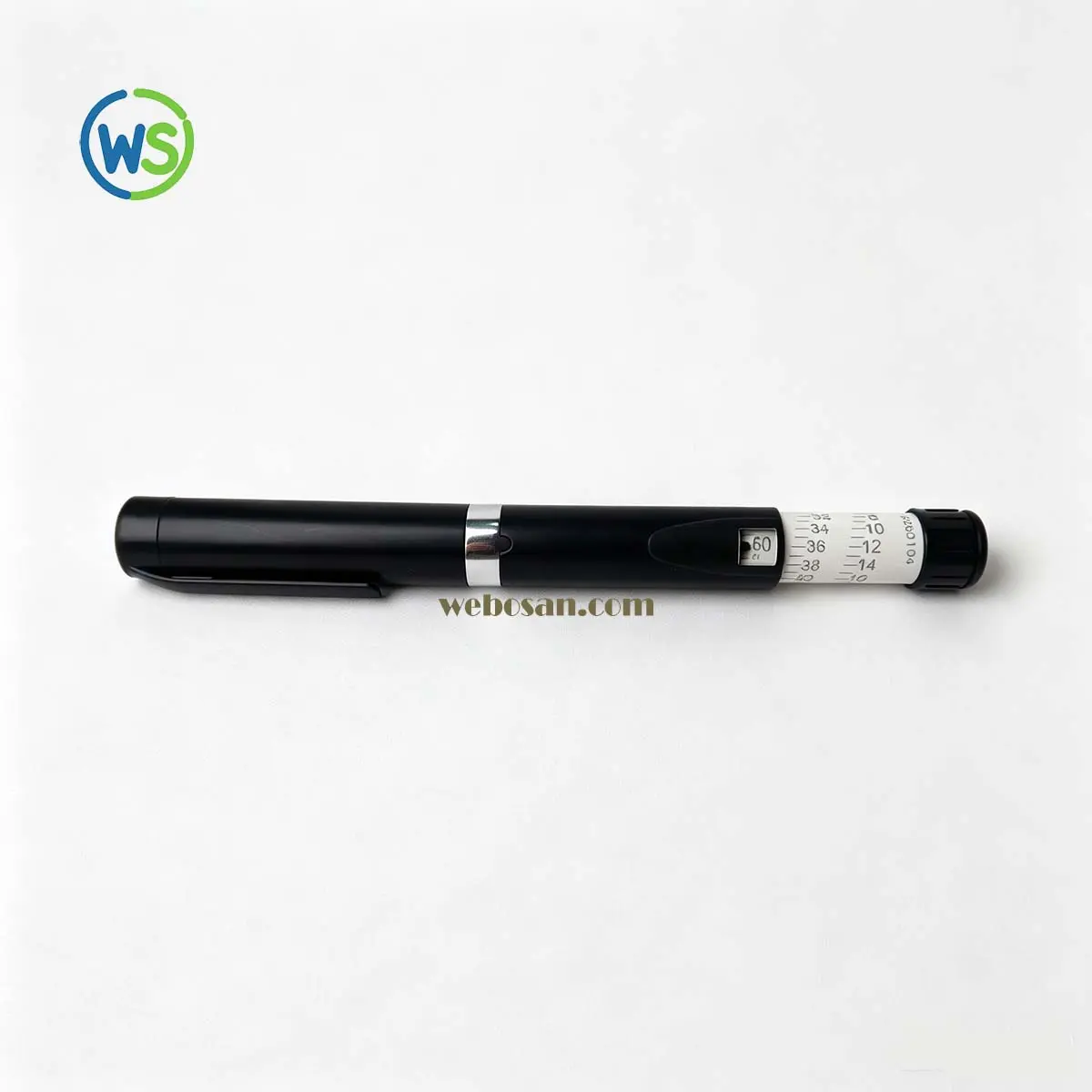
A peptide pen needs a dose mechanism that resolves very small volumes without drift. Our disposable DS-series pens support minimum dose steps of 0.01 mL (program dependent), with configurable maximum doses from 0.30 mL up to 0.80 mL depending on the platform. That range covers the small-dose profile of most peptide and GLP-1 programs while leaving headroom for dose-escalation schedules.
2. Low and consistent injection force
Long-term self-injection favors low injection force. Our DS-series platforms are specified at ≤ 10 N injection force, which — combined with a thin cannula — keeps the push comfortable across the full stroke. Injection force consistency is one of the parameters we test and record during production, alongside dose accuracy.
3. Audible, tactile, and visual dose feedback
Patients inject in settings where they may not watch the scale: early morning, low light, or while traveling. The DS-series pens combine scale numerals with audible clicks and tactile count, so the patient can confirm the dose without looking. This is a small detail with a large effect on adherence for daily or weekly programs.
4. Standard cartridge compatibility for reusable platforms
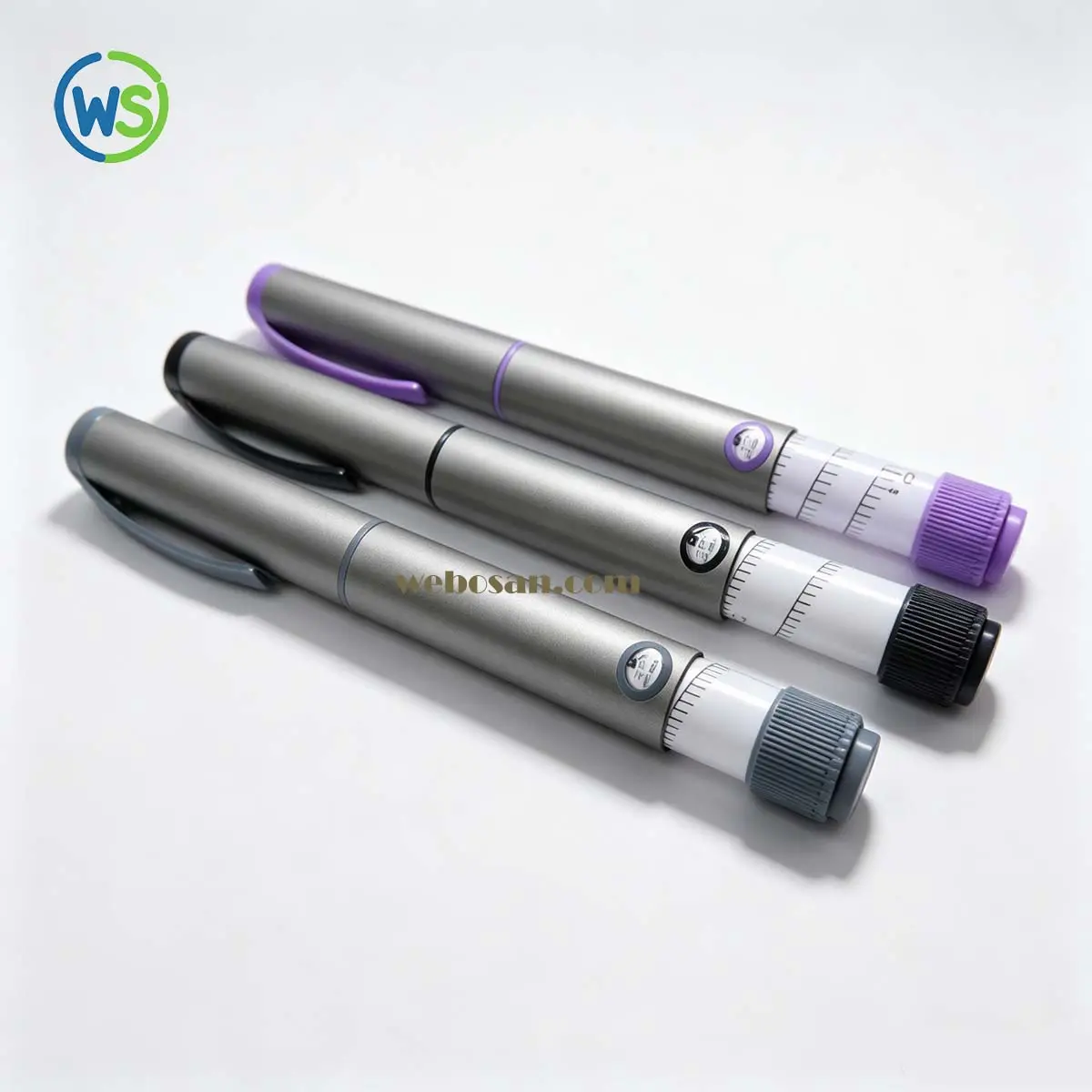
Our WS-RF reusable platforms accept standard ISO 11608-3 cartridges, including the common 3 mL format, with dose-scale customization per program. For a peptide program that moves from clinical studies to commercial supply, a reusable pen with a standard cartridge interface simplifies sourcing, scale changes, and patient transition between study devices and commercial devices.
5. Disposable platforms for simplified distribution
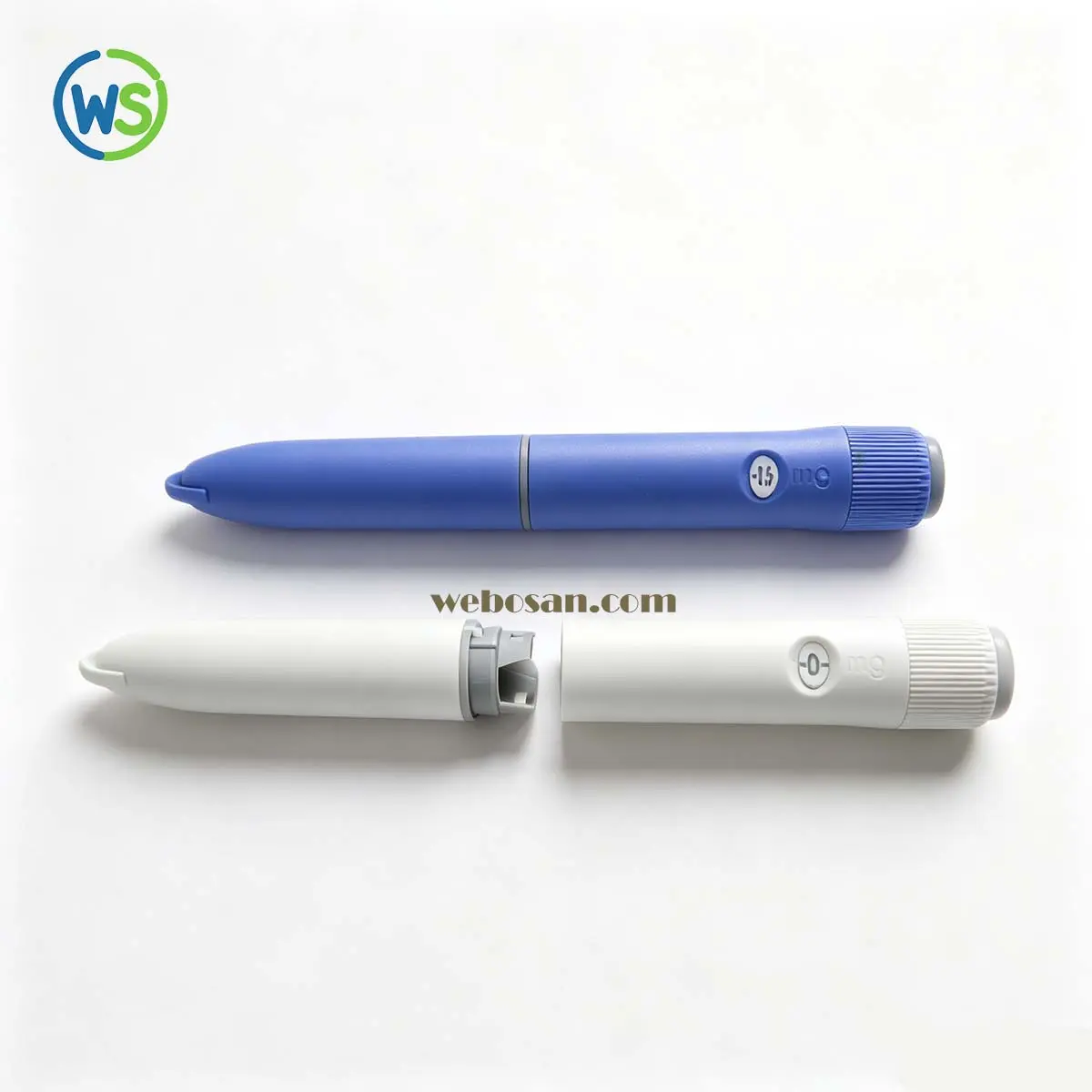
Pre-filled disposable pens (DS series) remove cartridge handling entirely. For launch-phase programs, clinics, and markets where patient training time is short, a disposable pen reduces the number of steps the patient must learn.
How to verify these claims as a buyer
Engineering claims are only as good as the test data behind them. When a manufacturer tells you a pen achieves small dose steps or low injection force, ask for:
- Dose-accuracy test data — delivered volume across the dose range, with tolerances
- Force curves — injection force across the full stroke, not just a peak number
- Feedback verification — audible/tactile counts across the dose range
- Cartridge compatibility evidence — ISO 11608-3 fit with the specific cartridge your program uses
- Sample evaluation — hands-on checks with your own formulation and needle
The compliance boundary
A pen is a delivery device; the peptide medication is supplied separately and remains under the control of the drug developer. webosan supports program evaluation with devices, needles, and packaging only, and always documents the distinction between device and drug in commercial conversations.
Summary
A manual injection pen fits peptide therapy programs when it is engineered around small dose steps, low injection force, clear feedback, and standard cartridge compatibility. Those are the parameters our DS-series and WS-RF-series platforms are built and tested against. Evaluate any candidate platform with the checklist above before committing to a program.