Key Takeaways
- Reusable pens fit cartridge-based programs with recurring supply, branding flexibility, and lower long-run device cost.
- Disposable pre-filled pens simplify training and channel logistics at a higher per-unit device cost.
- The decision follows therapy program, distribution channel, training burden, and branding needs — not habit.
Procurement teams searching reusable vs disposable injection pen are usually past the “what is an injection pen” stage. They need a decision framework: which delivery model fits the therapy program, distribution channel, training burden, branding plan, and supply risk.
This comparison is written for B2B buyers — distributors, clinic networks, therapy brands, and OEM partners — not for patient self-diagnosis. webosan supplies device platforms and accessories; we do not sell finished drugs online.
Browse the current portfolio under reusable pen injectors and disposable pen injectors while you read.

1. What “Reusable” and “Disposable” Mean in B2B Practice
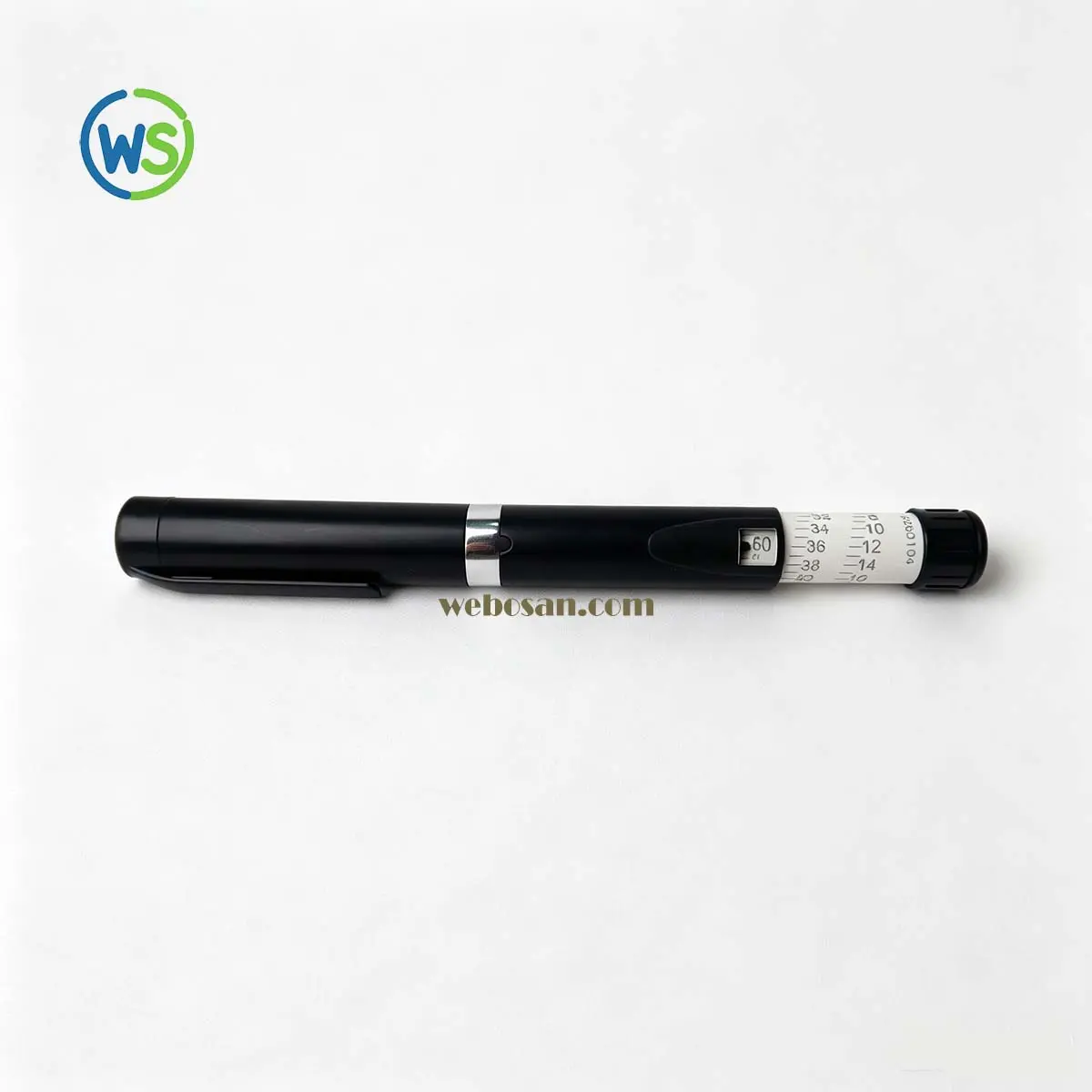
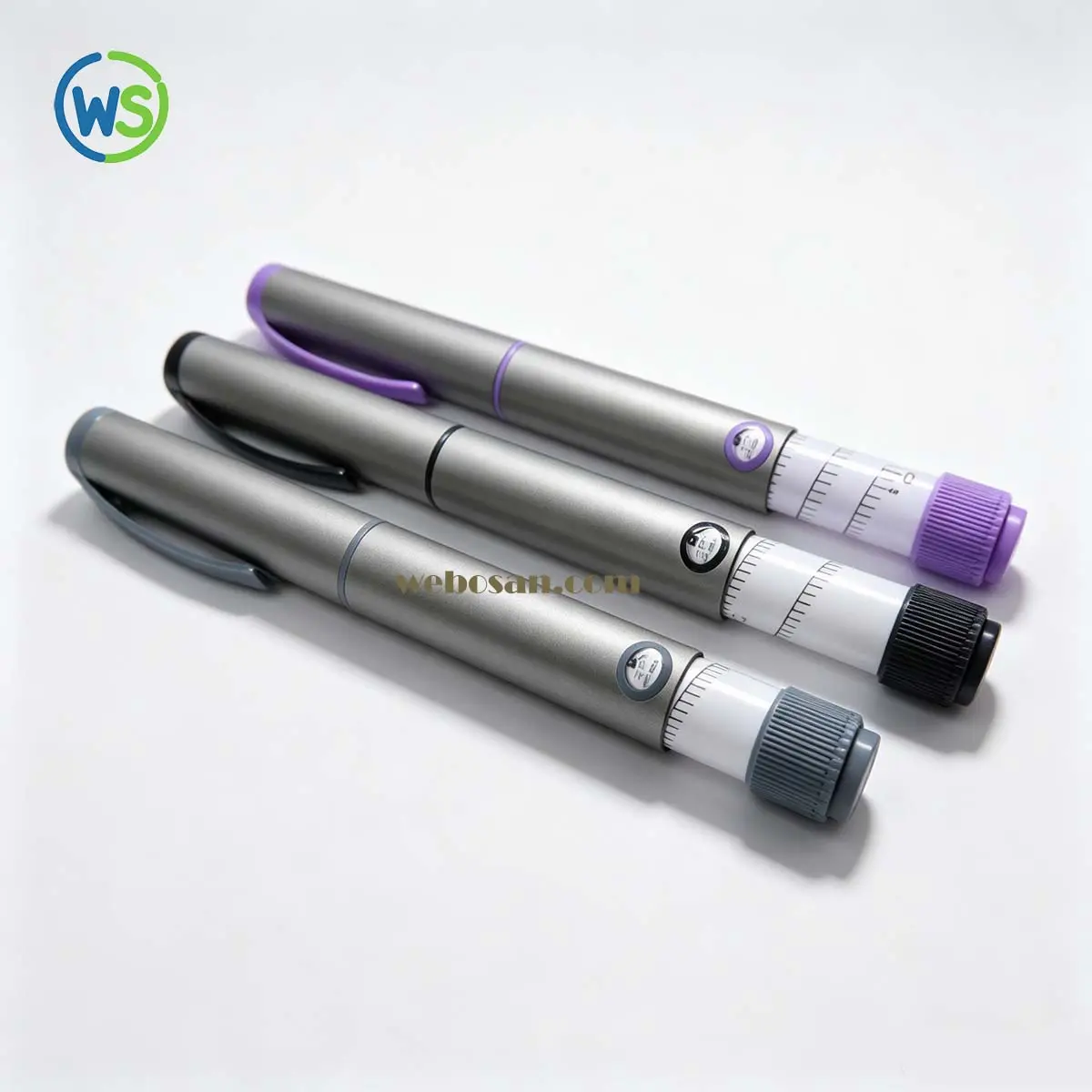
A reusable injection pen typically keeps the same pen body while the user replaces a cartridge (often a 3 mL cartridge format). Buyers evaluate dose dial feel, cartridge fit, durability across cycles, and long-term branding on the housing.
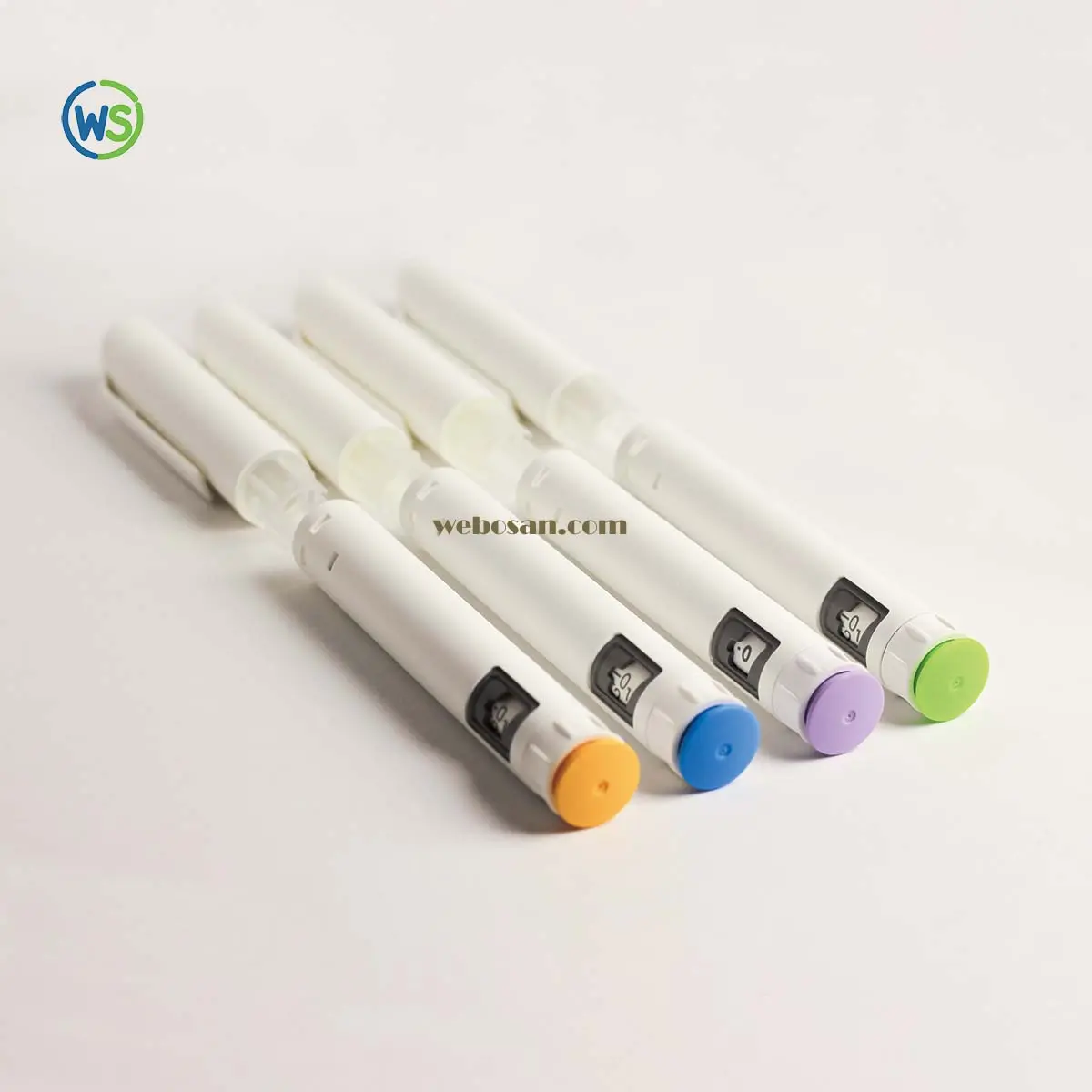
A disposable injection pen is usually designed as a pre-filled or single-course platform. Buyers evaluate fill/assembly direction, first-use workflow, packaging simplicity, and scalable unit supply.
Both categories can support insulin, GLP-1 / metabolic, hormone, or aesthetic programs. The commercial difference is how the product moves through inventory, training, and reorder cycles.
2. Decision Table for Procurement Teams
| Factor | Reusable cartridge pen | Disposable / pre-filled pen |
|---|---|---|
| Primary value | Platform longevity + cartridge logistics | Distribution simplicity + consistent first use |
| Typical buyer focus | Dose feel, cartridge fit, durability | Packaging, training steps, unit supply |
| Branding surface | Housing, scale, long-life brand object | Carton, label, kit presentation |
| Inventory model | Device + cartridge planning | Unit-level SKU planning |
| Best fit | Ongoing therapy programs with cartridge supply | Programs prioritizing simple distribution |
Use the table as a starting filter, then validate with sample review. Platform choice without tactile evaluation is how projects stall after artwork is already approved.
3. When Reusable Pens Are Usually the Better Fit
Choose a reusable direction when:
- The therapy program expects repeated cartridge changes over months
- Distributors already manage cartridge logistics
- Brand owners want a durable device patients keep and recognize
- Dose adjustment precision and dial feedback are central to user confidence
- OEM/ODM partners want one housing platform across multiple market variants
Reusable platforms also create clearer accessory ecosystems — cases, pouches, and needle assortments can support the same pen body over time. Explore related categories under accessories and pen needles.
4. When Disposable Pens Are Usually the Better Fit
Choose a disposable direction when:
- The commercial model prefers ship-and-use simplicity
- Training must stay short for clinic or retail channels
- Branding is driven more by packaging and kit presentation than by a long-life pen body
- Supply planning is organized around unit demand rather than cartridge refill cycles
- Partners want to reduce field issues linked to cartridge change technique
Disposable platforms are often evaluated alongside custom kits when a brand needs a complete first shipment experience (device presentation + needles + literature). See custom injection kits.
5. Total Cost Is Not Only Unit Price
Buyers who compare only factory unit price miss the larger cost stack:
- Sample and pilot iterations
- Tooling and cosmetic grade expectations
- Packaging artwork and IFU translation
- Training materials and complaint handling
- Freight, customs documentation, and reorder lead time
- Inventory risk if SKU complexity grows too fast
A reusable program may look more expensive per device and cheaper over therapy months. A disposable program may look cheaper per unit and more expensive in packaging SKUs. Run both models with your expected annual volume before locking a platform.
6. User Experience Differences That Show Up in the Field
Reusable pens reward careful dose-feel engineering. Users keep the device; any dial stiffness or end-stop inconsistency becomes a recurring complaint.
Disposable pens reward first-use clarity. Caps, needle attachment, dose confirmation, and disposal messaging must be obvious without long training.
Neither model is “more premium” by default. Premium comes from consistency: every shipped lot should feel like the approved sample.
7. Regulatory and Documentation Implications
Both reusable and disposable device programs need quality documentation for partner onboarding. The difference is often in how labels, IFUs, and lot records are structured for the chosen commercial model.
Ask suppliers for:
- Device specifications and configuration matrix
- Sample notes from functional checks
- Packaging and labeling process for market languages
- Change-control approach when dose scale or color changes
- Export documentation support for your destination markets
If documentation only appears after payment, treat that as a risk signal.
8. A Practical Selection Sequence
- Define therapy application and distribution channel.
- Choose reusable vs disposable as a logistics model, not as a brand slogan.
- Shortlist platforms in reusable and disposable categories.
- Request samples with written review criteria (dose feel, packaging, labeling).
- Run a pilot SKU set before full market artwork freeze.
- Lock reorder timing and quality contacts before commercial launch.
9. Common Mistakes to Avoid
- Selecting disposable because “it sounds simpler,” then discovering the program actually needs cartridge flexibility
- Selecting reusable for brand prestige, then underestimating cartridge training burden
- Approving packaging before dose-feel sample sign-off
- Mixing too many color and scale variants before the first commercial lot is stable
- Ignoring needle and accessory fit until after device artwork is finished
10. How webosan Supports Either Path
webosan manufactures and supports both reusable cartridge platforms and disposable pen platforms for B2B programs. Procurement teams can compare categories on the products page, then send application, dose range, cartridge format, target market, and estimated volume through contact.
If you are still deciding between models, say so in the inquiry. A useful factory response should recommend a platform path and a sample plan — not only a price list.
Reusable vs disposable is a commercial architecture choice. Make it with logistics, training, branding, and supply risk on the table, then confirm it with samples.