Key Takeaways
- Full ODM goes beyond logo printing and housing recolor: structure, geometry, dose mechanism, and mould tooling are engineered from scratch around the therapy program.
- Own-mould development protects exclusivity and lets brands control material, texture, color, and assembly tolerances.
- ODM timelines are driven by mould engineering and validation, not decoration — plan sample and tooling milestones early.
Standardized injection pens often look and feel interchangeable. Housing geometry, button layout, and dose dials repeat across the market, so many therapy brands struggle to match formulation behavior, brand positioning, and end-user scenarios with an off-the-shelf device.
webosan offers full custom injection pen ODM — not limited to recoloring an existing housing or printing a logo on a finished platform. Buyers can define a new device from zero: exclusive industrial design, mechanical structure, function set, independent mould tooling, and a complete branded visual system. The same capability covers disposable, reusable, auto-injector, and fixed-dose programs.
This guide explains the customization dimensions, design-to-tooling workflow, branding options, and compliance expectations for B2B teams evaluating ODM injection pen design and custom medical pen mould tooling.
1. Why Full ODM Matters More Than Recolor and Logo Print
Many factories describe “customization” as color change, logo marking, and packaging artwork. Those options remain useful for pilot launches and short programs. They are not the same as building an exclusive injector platform.
A true exclusive design injector pen project starts earlier:
- no forced use of an existing pen body if it does not fit the brand or therapy;
- no forced compromise on dose mechanism if the formulation needs a different feel or range;
- no shared tooling that leaves the same silhouette available to other buyers;
- no branding layer that only sits on top of a generic device.
For pharmaceutical, biotech, aesthetic medicine, and chronic-care programs, the device is part of the therapy experience. When the pen looks and behaves like every other pen on the shelf, brand differentiation becomes harder to defend.
Related reading: our OEM manufacturing process guide and packaging and OEM branding options cover production and pack-out details. This article focuses on what happens when you need a device that does not yet exist.
2. webosan Customization Advantages
Unlike programs limited to finished-product fine-tuning, webosan supports open-ended customization:
- No style lock-in. New structure, new size envelope, and new silhouette can be designed without starting from a fixed catalogue pen.
- No function lock-in. Fixed dose, micro-adjustment, auto-fire, safety lock, anti-misoperation features, and memory scale concepts can be specified to the therapy brief.
- Full in-house flow. Industrial design → structural modeling → DFM review → mould tooling → sampling and testing → compliant mass production.
- Exclusive ownership potential. Newly developed tooling can be allocated for customer-exclusive use, reducing the risk of identical market copies.
- Full brand system. Dedicated colorways, logo placement, scale typography, and overall visual identity can be developed as one coherent device language.
This is the practical meaning of reusable & disposable pen injector customization under a full ODM model: the customer is not only selecting options from a menu; the customer is defining the product.
3. Five Customization Modules Buyers Care About Most
3.1 New Exterior Design From Scratch
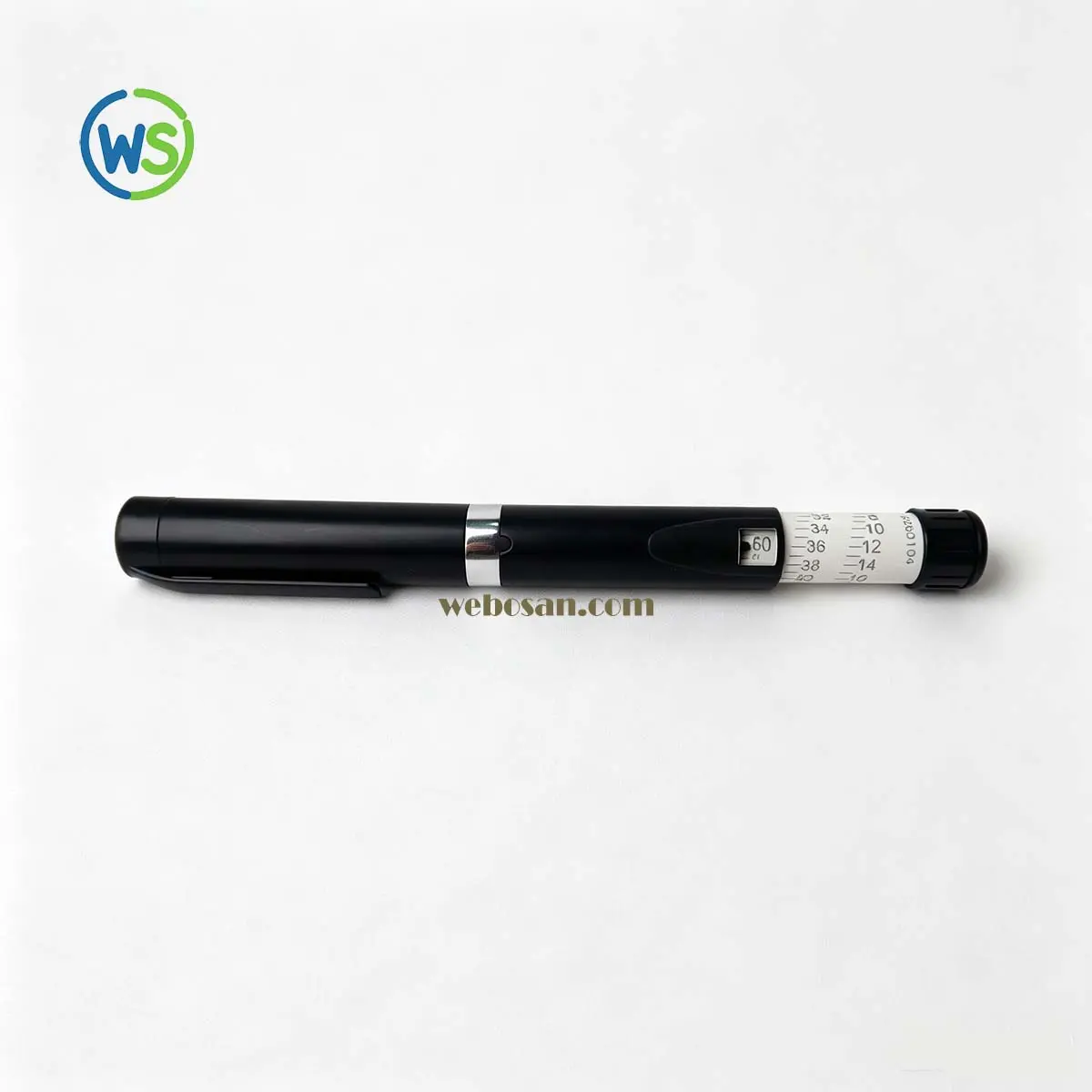
Exterior design is not limited to existing pen families. Based on brand tone, grip ergonomics, and packaging constraints, webosan can design:
- body line language and proportion;
- diameter and length envelope;
- clip geometry;
- button form and travel feel;
- segmented housing architecture;
- visual direction ranging from streamlined, minimal business, to clinical-professional.
The goal is a pen that belongs to the brand, not a pen that only carries the brand mark.
3.2 Exclusive Color and Surface Finishing
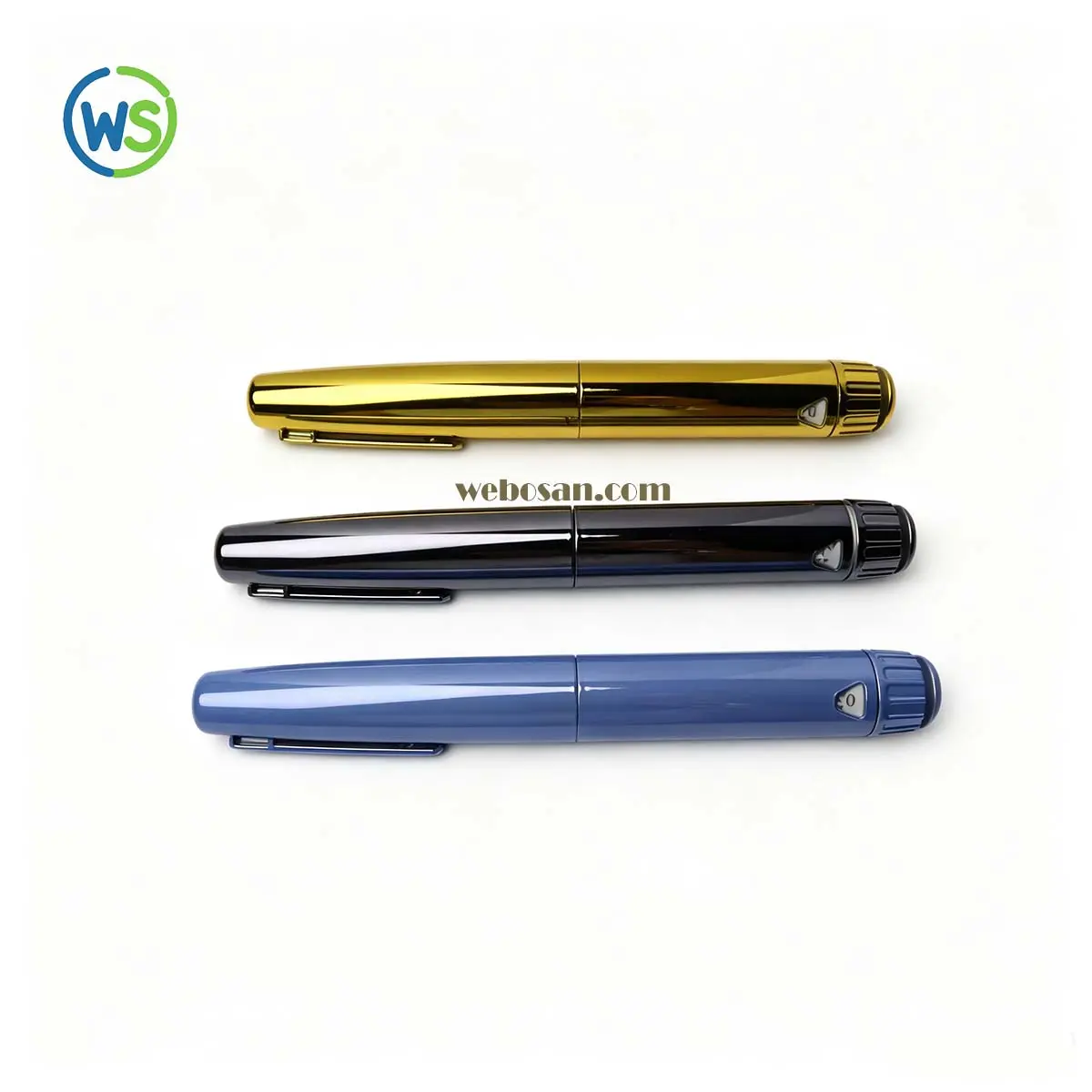
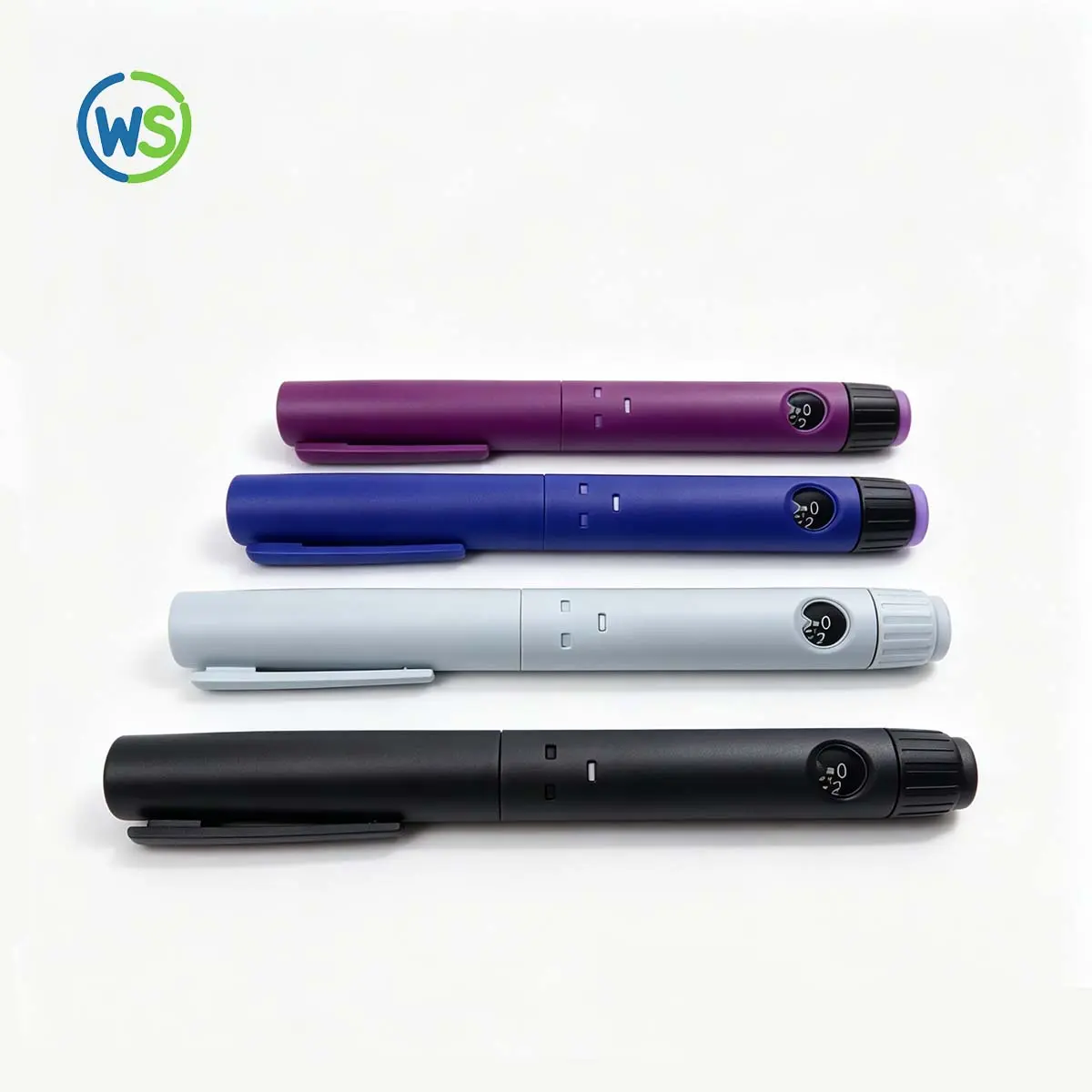
Color and finish programs support full custom definition rather than a fixed color card only:
- Pantone-matched medical-grade colorants;
- dual-tone and contrast combinations;
- matte, soft-touch, glossy, or specialty tactile finishes;
- biocompatibility-minded pigment and material selection for long-term medical use.
For buyers comparing platforms such as WS-RF10 and WS-RF11, color and surface decisions should be treated as part of the device identity, not a late packaging afterthought.
3.3 Deep Function and Structure Customization
Structure follows formulation and use case. Depending on insulin, peptide, weight-management, chronic-care, or emergency dosing needs, custom programs can address:
- dose adjustment range and resolution;
- scale readability and layout;
- self-locking and anti-misassembly logic;
- auto-return or return-assist concepts;
- hidden-needle strategies where relevant;
- child-resistant locks;
- larger buttons and clearer feedback for older users.
This is where ODM injection pen design becomes engineering work, not only industrial design.
3.4 Full Brand Visual System
Custom branded injection pen programs can cover marking and visual identity across the whole device:
- laser engraving, silk screen, pad print, and precision transfer methods;
- logo placement strategy;
- dose scale fonts and numbering style;
- model identification;
- warning copy and regulatory-facing text areas.
Branding should read as one system with the housing design, not as a sticker added after tooling is frozen.
3.5 Independent Mould Tooling as a Competitive Barrier
New exterior, structure, and function can be supported by dedicated tooling:
- exclusive housing moulds;
- dedicated structural moulds;
- accessory-specific tooling.
When customers secure exclusive tooling rights, the product is no longer a shared catalogue silhouette. That exclusivity supports long-term brand building and reduces commodity comparison pressure. It is also the core reason buyers search for custom medical pen mould tooling instead of only “private label printing.”
4. Two Customization Paths
Path 1: Light Customization Without New Tooling
Best for pilots, small launches, and short programs.
On a mature structure, buyers can customize color, logo, surface finish, and scale artwork. Cycle time is shorter, investment is lower, and flexibility is high. Platforms such as WS-DS01 or kit programs like WS-KIT01 often start here when the commercial priority is speed.
Path 2: Full ODM Customization With New Design and Tooling
Best for long-term brand strategy, exclusive device identity, and differentiation against competing pens.
Typical flow:
customer brief → industrial design and modeling → structure optimization → DFM review → exclusive mould development → sample validation → compliant mass production.
This is the path for teams that need a device that does not exist in any shared catalogue.
5. Development Workflow From Brief to Delivery
A complete custom program usually moves through these stages:
- Requirement discussion
- Proposal and quotation
- Exterior and structure sketch confirmation
- 3D modeling and rendering
- Engineering structure review
- Mould design and tooling
- First-article sampling
- Function and appearance inspection
- Pilot production
- Mass production delivery
- After-sales iteration and optimization
Each stage exists to reduce later risk. Skipping DFM review or freezing branding too late often creates rework after tooling money has already been spent. For a broader factory-side view, see also our injection pen manufacturer guide.
6. Compliance and Quality Expectations
Custom does not mean uncontrolled.
- Custom resins, colorants, and printing materials are selected against medical-use expectations, with attention to biocompatibility, corrosion resistance, and low-extractable risk.
- New moulded structures are validated through mechanical checks, dose-accuracy evaluation, and connection durability testing as required by the program.
- Documentation support can be aligned with registration preparation, inspection packages, and batch traceability needs.
- Disposable and reusable programs follow different material and process assumptions; customization must respect that distinction.
Buyers evaluating regulatory context can also review FDA, CE, and ISO expectations for injection pens.
7. Device Categories Covered by Full Customization
Full ODM customization can cover the main pen-injector categories:
- disposable injection pens;
- reusable injection pens;
- auto-injector concepts;
- insulin pens;
- peptide delivery pens;
- aesthetic fixed-dose pens;
- chronic-care dedicated delivery devices.
Whether the commercial goal is a refined catalogue program or a completely exclusive platform, the starting question should be the same: what must this pen do that a shared market silhouette cannot do?
8. Closing and Next Step
Unlike catalogue recolor and logo-print services, webosan provides true full-dimension injection pen ODM customization. Whether you need a light visual upgrade on an existing platform or a from-zero exclusive structure, exterior, and brand system, the work can be planned as one connected path — from industrial design and structure engineering to mould tooling and commercial delivery.
Need a fully custom injection pen with exclusive design and tooling? Contact webosan to get your free customized solution and project evaluation via Contact, or review more factory capability on About webosan.