Key Takeaways
- Factory visits focus on delivery stability, quality consistency, and complaint response — not on how the sample looks.
- Evidence buyers check: batch-to-batch QC records, inspection automation, documentation discipline, and how the factory handles defects.
- A supplier’s failure mode is usually process control at scale, which only a floor walk and record review can reveal.
The meeting did not start with a product brochure.
A European buyer had flown to the webosan factory after difficult experiences with another China supplier. The previous cooperation had not failed because the sample looked bad. It failed because delivery moved without warning, batch expectations changed between shipments, and questions took too long to turn into usable answers. This time, the customer came with a supplier evaluation sheet already prepared. He did not want another polished presentation. He wanted to see what was behind the promises.
Engineer Zhang, using a pseudonym here, did not begin by introducing pen models, cartridge sizes, or surface finishes. She asked a different question first:
“When you decide whether a supplier is reliable, what do you actually look at?”
The answer was immediate and practical. The buyer cared about three things above all else:
- Delivery stability.
- Quality consistency.
- Response speed when something goes wrong.
That answer set the tone for the entire discussion. The meeting was not really about product parameters. It was about manufacturing capability. For B2B buyers, that is usually the real difference between a supplier who helps a program scale and a supplier who only performs well during sampling.
1. What the Customer Really Wanted to Verify
Many supplier visits begin with a familiar sequence: factory introduction, product photos, specification sheets, and a quick walk through the showroom. Those things have their place, but they often stay too close to what any supplier can say.
Zhang chose to work from the buyer's own scorecard instead.
She asked how the customer weighted each topic internally. Was delivery risk the main concern because the program had a fixed launch window? Was quality consistency the highest priority because distribution partners had already experienced complaints? Was issue response the critical point because the buyer's technical team needed faster root-cause analysis when questions emerged after goods arrived?
The customer explained that earlier projects had exposed the same pattern more than once:
- sample approval had created confidence;
- commercial production created uncertainty;
- communication became less clear exactly when it mattered most.
That is why the meeting stayed anchored in manufacturing operations rather than design language. The buyer did not need another general statement about being “professional” or “strict in quality.” He wanted to know what evidence supported those words.
At webosan, this kind of discussion is often more useful than a purely product-led meeting. A syringe or injection pen specification sheet can explain dimensions, materials, or dose concepts. It cannot show whether the production side is disciplined enough to maintain output rhythm, preserve process consistency, and answer technical questions with traceable logic.
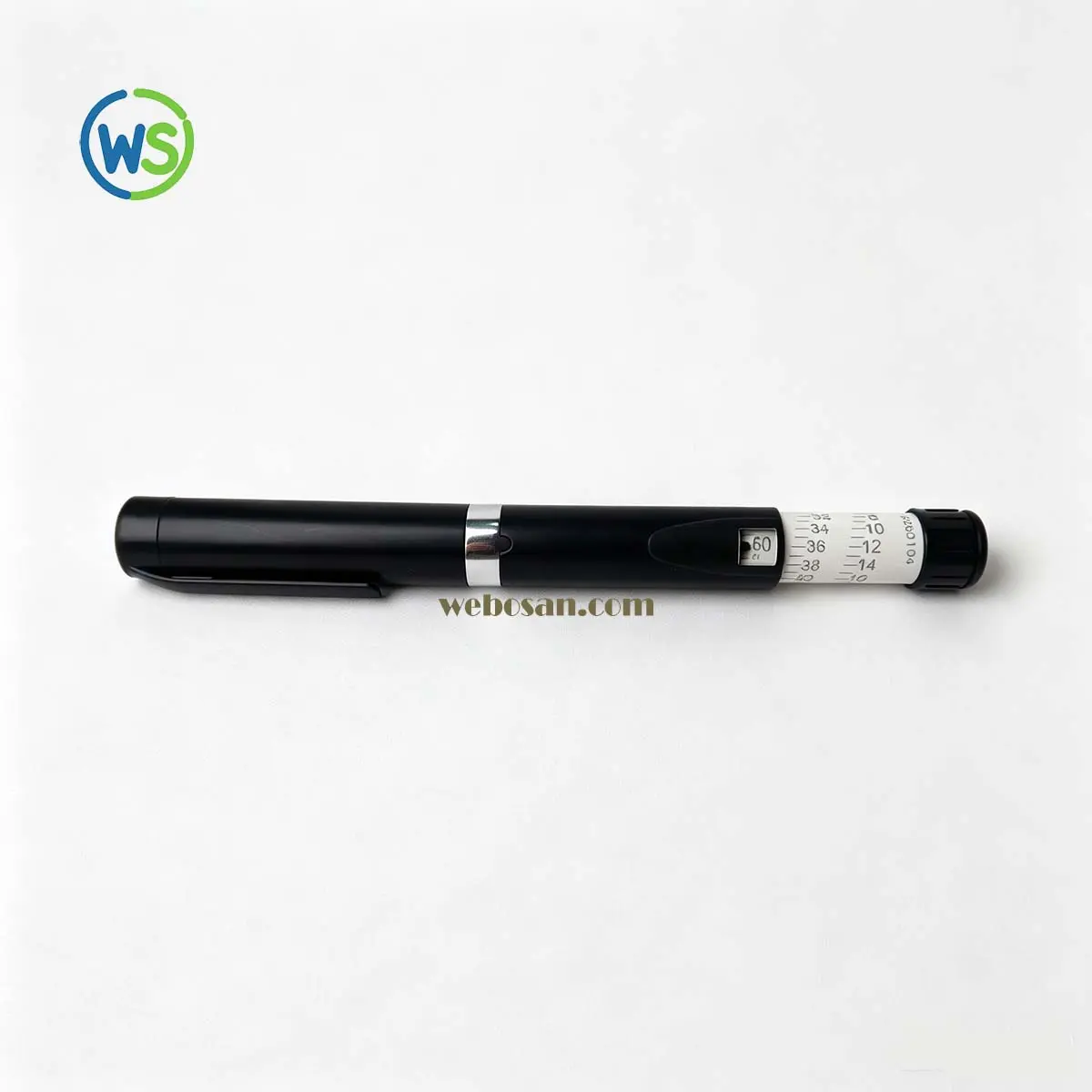
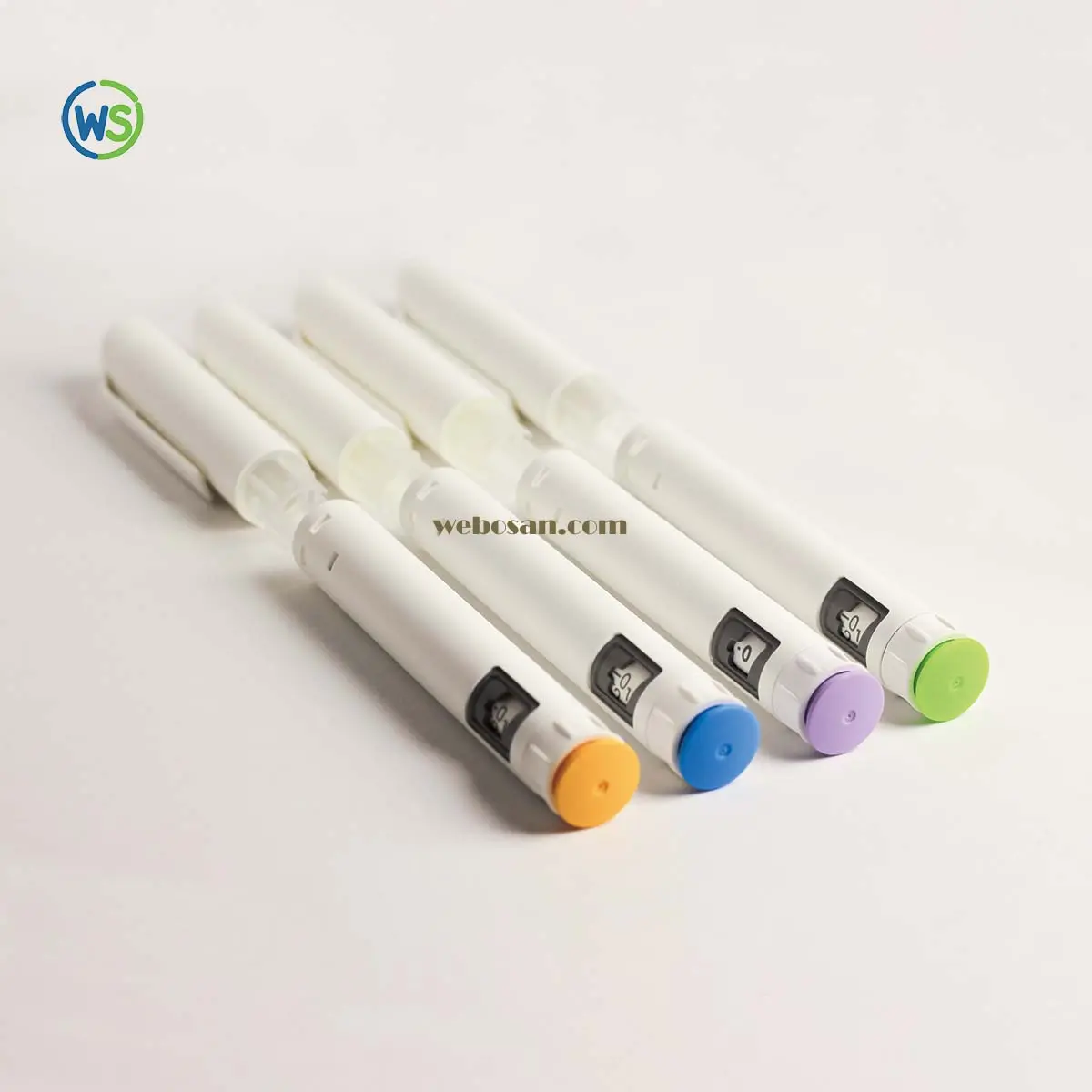
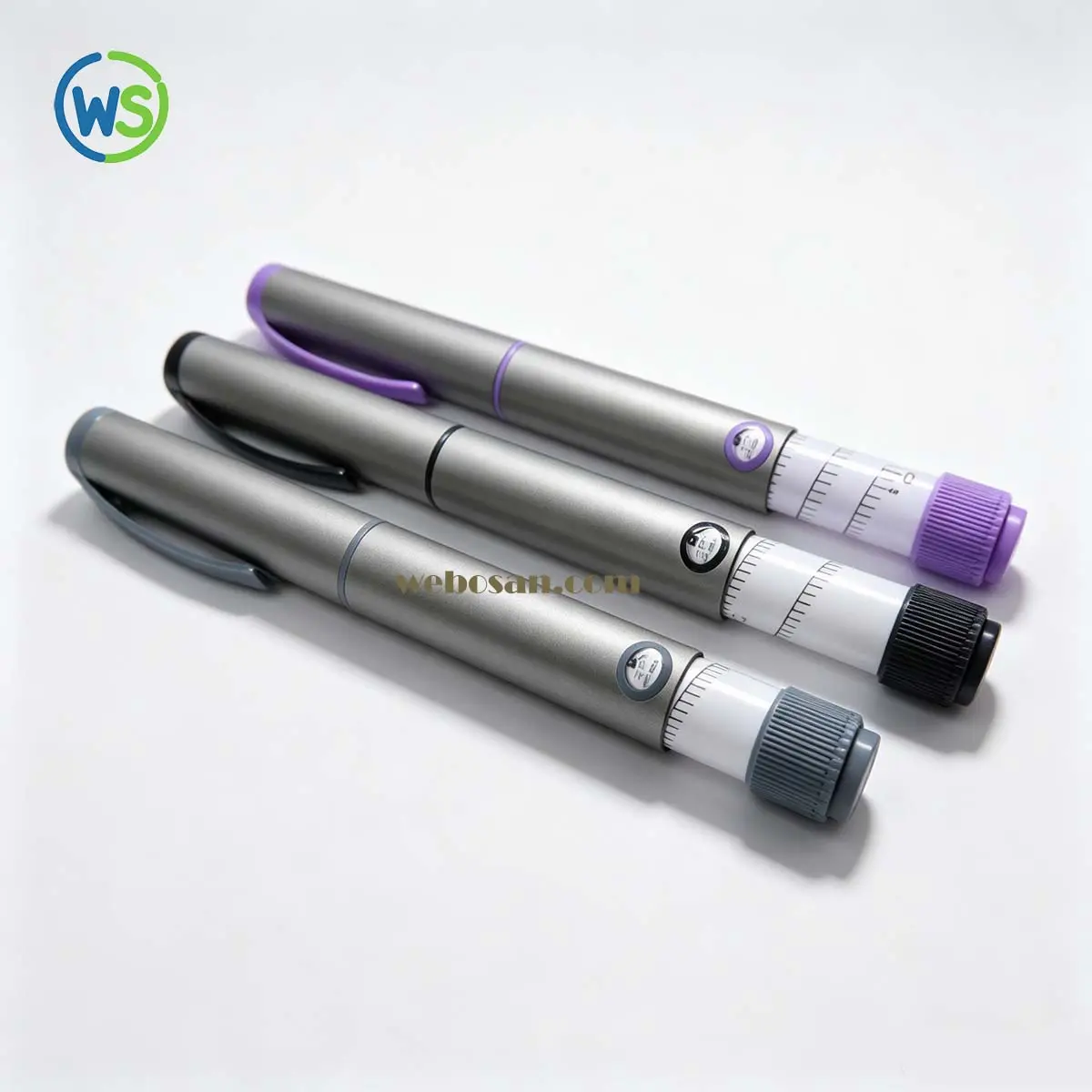
This is also why buyers comparing reusable injection pens, disposable injection pens, or kit programs such as WS-KIT01 should evaluate the factory system around the product, not only the product itself.
2. Delivery Stability Is Not a Sales Phrase
The customer's first pain point was delivery reliability.
He described an earlier experience without naming the other supplier. Quotations had looked reasonable. Sample communication felt smooth. But once the program moved closer to actual purchase planning, promised timing became less stable. Production windows shifted. Internal planning on the buyer side became harder. Trust did not disappear in one dramatic moment. It eroded because each update brought uncertainty rather than clarity.
Zhang responded by showing how webosan discusses delivery commitments internally.
Instead of treating lead-time language as a simple commercial promise, she explained it in production terms:
- which steps depend on tooling readiness;
- which steps depend on material and component coordination;
- which steps depend on assembly sequencing and inspection release;
- and which steps require customer-side confirmation before production should move.
That distinction matters. Many B2B misunderstandings happen because the customer hears one overall date, while the supplier is mentally tracking several internal milestones that were never explained clearly.
Zhang then showed examples of how delivery status is supported by production scheduling logic rather than by optimism. She emphasized that a delivery commitment must be connected to a real plan: component arrival, line allocation, inspection hold points, packing release, and shipment preparation. Without that structure, timing statements are only language.
The buyer reacted strongly to this part of the meeting because it matched the gap he had felt before. His problem had not only been delay. It had been the absence of a visible system behind the promise.
For factories producing models such as WS-DS01 or flagship reusable platforms like WS-RF11, delivery stability affects more than shipping dates. It influences launch planning, distributor communication, training preparation, packaging rollout, and the customer's own credibility with downstream partners.
That is why delivery should be discussed together with manufacturing flow, not separated from it. Our broader sourcing guide and factory evaluation guide cover this from the buyer side; the live factory meeting showed how those questions translate into operational discussion.
3. Quality Consistency Means More Than a Good Sample
The second topic was even more important to the customer than the first.
He said something many experienced B2B buyers eventually conclude:
“I am not only checking whether the sample is good. I am checking whether mass production can remain equally good.”
This is where many factory visits become superficial. It is easy to present a clean sample. It is harder to explain how the same feel, finish, assembly condition, and documentation discipline are maintained from batch to batch.
Zhang approached this through line management rather than through slogans.
She explained that quality consistency is protected by a chain of controls:
- incoming material and component verification;
- process confirmation at key assembly steps;
- traceability between lots, work orders, and inspection records;
- and retention of evidence that can be reviewed later if a question appears.
The buyer was especially interested in how webosan handles consistency in features customers can notice immediately, such as dial feel, assembly tightness, cosmetic alignment, and packaging completeness. Zhang noted that consistency is not only about whether a part passes or fails. It is also about whether the process can keep the same standard under normal production rhythm, not just during a controlled demonstration.
She then walked through the factory's traceability logic. If a customer later questions a shipment, the purpose of traceability is not simply to defend the factory. Its real value is to narrow the problem quickly:
- Which production period did the goods come from?
- Which materials and components were linked to that run?
- Which assembly stage might be relevant?
- Which inspection and release records can be reviewed?
That ability changes the quality conversation completely. Without traceability, every complaint becomes a general debate. With traceability, the discussion becomes an investigation.
The customer noted that in previous cooperation, even when the supplier agreed to “check internally,” the answer often came back too broad to be useful. Zhang replied that from the factory side, useful quality management means being able to turn a concern into a path of evidence.
This is one reason why buyers comparing premium-looking reusable platforms like WS-RF10 with other programs should assess not only the visible finish but also the consistency framework around that finish. A beautiful pilot sample does not prove a stable commercial process by itself.
4. Response Matters Most After the Goods Leave the Factory
The third topic was response speed, but not in the usual shallow sense of replying to an email quickly.
The buyer asked a more serious question:
If a quality issue appears, how long does it take before the supplier can give a real answer?
Zhang explained that webosan separates acknowledgement from analysis. A polite first reply is not the same as a technical answer. What the buyer really needs is a process that turns the case into a structured review: what happened, what evidence should be checked, what conditions might have contributed, and what conclusion can responsibly be shared.
To make the point concrete, she described a past complaint example in which the issue was not caused by a product defect.
The customer had observed use-related irregularity under a specific application environment. At first glance, the concern looked like a manufacturing problem. However, after reviewing the complaint with shipment traceability, retained samples, use conditions, and technical analysis, the factory concluded that the main variable came from the customer's own operating environment rather than from a product-side defect.
The important point in Zhang's story was not that webosan “proved itself right.” It was that the factory still prepared a complete analysis package:
- issue description and scope;
- review of traceability and retained references;
- condition comparison;
- engineering interpretation;
- and practical guidance for the customer team.
That kind of response changes the relationship. Even when the root cause is outside the factory, the customer still needs a serious answer they can circulate internally. From a B2B perspective, responsiveness is not only speed. It is the willingness to provide a full, usable analysis.
5. Why the Meeting Did Not End With a Contract
By the end of the discussion, the buyer did not sign a contract on the spot. That was not a failure.
Instead, he arranged the next step: a formal factory audit.
In real B2B purchasing, that is often the more meaningful outcome. Immediate enthusiasm may start a conversation, but structured follow-up shows that the factory has moved from “interesting supplier” to “serious candidate.”
What mattered in this meeting was that the customer saw a different kind of conversation:
- not product-led in a generic way;
- not overly defensive about previous market problems;
- not dependent on broad claims about quality;
- but centered on how manufacturing capability is exposed and discussed.
This kind of visit also reinforces why content about OEM manufacturing process, regulatory and documentation checkpoints, and reusable versus disposable platform decisions matters for SEO and for actual buyer education. Buyers search those topics because they are trying to reduce decision risk before they choose a manufacturing partner.
6. The Real Closing Line for B2B Buyers
For B2B buyers, anyone can write a specification sheet.
But not every manufacturer is willing to show the cards behind the manufacturing side.
That was the real conclusion of the day.
If you are evaluating an injection pen supplier, you are welcome to bring your own supplier scorecard to webosan. We can discuss delivery logic, consistency controls, traceability practice, complaint handling, and how those systems connect to specific programs such as WS-RF11, WS-RF10, WS-DS01, or WS-KIT01.
You are also welcome to review our broader About webosan information and contact us directly through Contact webosan to arrange a site visit or supplier evaluation discussion.